
Plan Preschool Themes for the Whole Year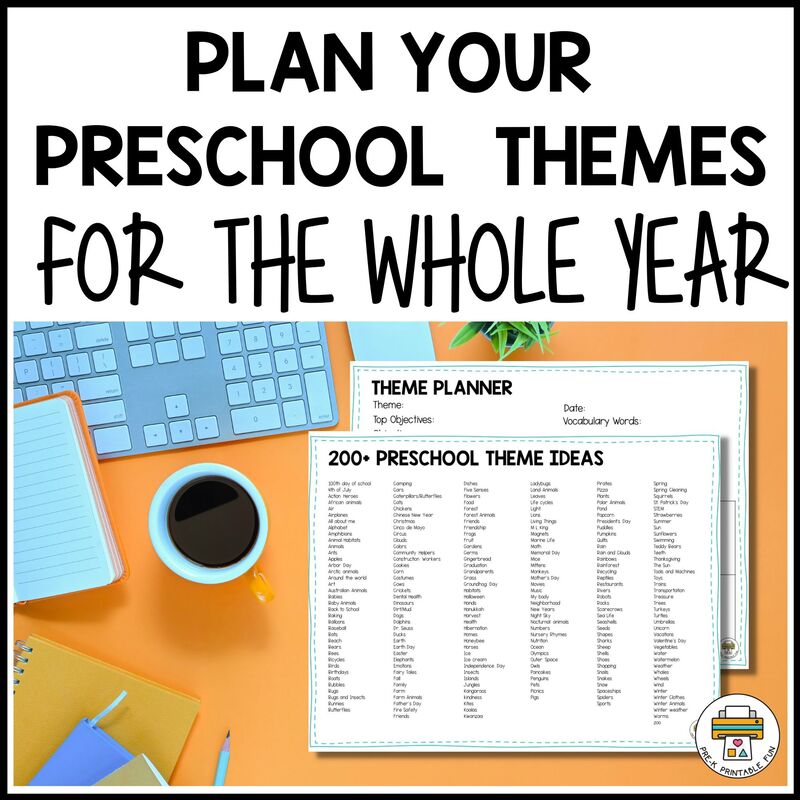
Planning your themes for a whole year can feel a bit overwhelming at first, but having a good roadmap for the whole year will help you stay focused, and save you time as you plan your monthly/weekly activities.
Below you can find simple, actionable steps you can take to help you plan your yearly theme calendar. To save you even more time, please be sure to download our free theme planning guide. Why I love themed based learning
Themed lessons help young children to make deep learning connections. Learning is an integrated process and thematic units support how the brain works. Theme based units allow children to benefit from connections made across the lesson plans, in different learning domains.
Thematic units serve as a jumping off point to expose children to a variety of new topics, and concepts. Using a theme as a base for your curriculum also makes it easier for you to pick and choose a variety of activities that will work well for multiple age groups, or children at different learning stages. Before you start scheduling
Before you start scheduling your themes, it's helpful to cross out the weeks on your calendar where you are on vacation or closed.
How many themes a year?
Next, you'll need to determine how many themes you'll plan for the year.
To determine this you'll need to decide how often you plan on rotating your themes. The most popular options are monthly, every two weeks, or weekly. Monthly rotation: A monthly rotation will allow you to plan for 12 theme units. You may want to consider a monthly rotation if you only want to "rotate" items every 30-days. Downfalls: It may be hard for you to find enough activities to support a month long theme. A month on one topic may be far too long and boring for both you and your students. Two Week Rotation: This rotation offers the chance to introduce your students to 27 different topics. This gives you a chance to dive deeper into topics to extend the learning. As a downfall, you may find by week two, some students as less engaged. One Week Rotation: This rotation allows you the chance to expose your student to 52 different learning opportunities. Each week there is something new to explore. Downfalls: you may end up spending more money up front to purchase materials. Remember plans should be flexible, this is just a jumping off point. After you choose a rotation, you may find that it needs to be adjusted. Tips on picking your Themes
Now that you know how many themes you'll need to plan for the year, let's talk about what to consider when choosing specific themes:
Meaningful learning allows young children to link their own experiences to new concepts, and ultimately allows them to begin to have a better sense of their world. If you get stuck, or just need some inspiration visit our free Theme Planning Pages for inspiration. A little bit about our annual Theme pacing calendar, and how it can save you time planning your lessons!
Each year, we release our own updated theme pacing calendar. Not only does it save our readers and members time planning their own year, it also guides all of the content we create here at Pre-K Printable fun. This calendar coordinates with our products, our free weekly newsletter, and our free theme planning pages.
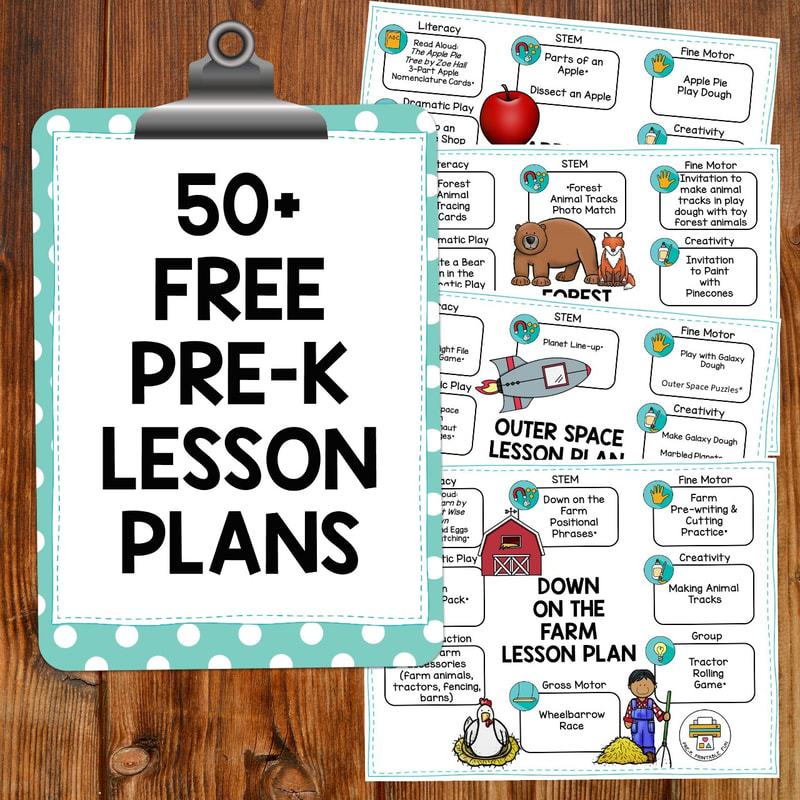
On our coordinating theme planning pages, our readers can find a free sample lesson plan for each theme, as well as tons of supplemental activities that support the development of preschool aged students in a variety of key learning areas such as: cognitive, social, physical development, and creativity. As a newsletter subscriber we'll send out done for you content ideas every Saturday. These include a book suggestion, free printable, and easy low cost extension ideas related to the the featured theme of the week on our calendar! Our Suggested Themes & Pacing Calendar
Each year, our Team produces a done for you thematic pacing calendar. We use this as a guide to publish new theme content, as well as weekly Saturday lesson planning newsletters. You can follow along with our weekly recommendations to save even more time, or use the editable calendar that we've included inside the theme planning guide to create your own.
A Note about repeating Themes:
Please know it is OK (and even beneficial) to repeat themes each year. New learning has to be repeated and reinforced for it to be truly remembered and understood. Next year, through KWL exercises, you may find some students remember a piece of what was taught, and you can dive deeper by teaching new concepts that teach them more about the topic.
If you are a childcare provider, repeating themes will allow you to save time, and improve your programming in the future. Once your themes are set, and your materials are purchased, you only have to focus on differentiating your activities to meet the developmental needs of your students, but your supplies and materials can be reused year after year. Take notes about the success of your lessons each year. What worked well, what do you need to improve. Download Your Free Theme Planning Guide
You might Like
Tips for Organizing your Toys & Materials

|
What can I help you find?
Become a Member
Get Free
|
 RSS Feed
|
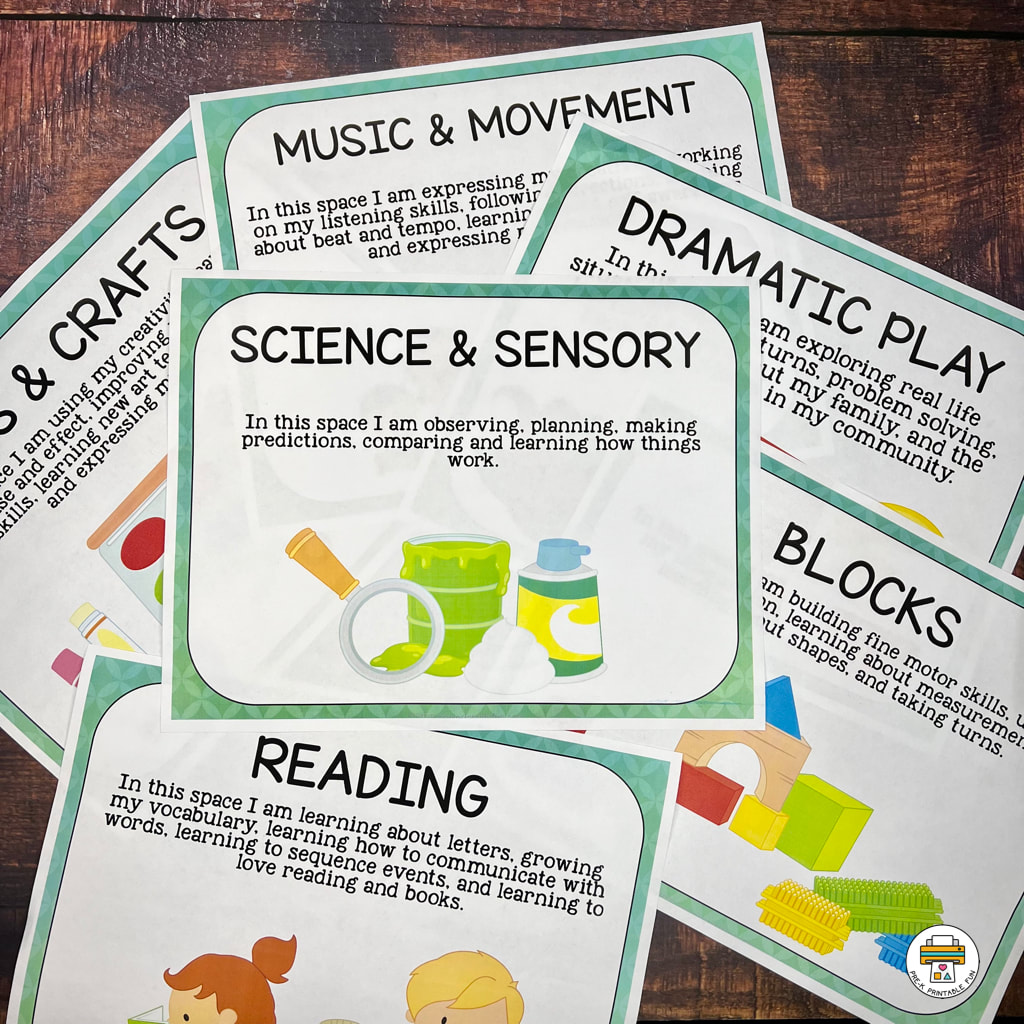
Learning Centers
Preschool Learning Centers are commonly referred to as Preschool Centers, or Learning Spaces. These are activity areas dedicated to a specific type of of play and exploring a variety of topics and activities. Download our Free set of Center Signs!
|
Site
|
|